CANUS/How it works
From a connected siteto a leased pod.
We find a site that already has power and fibre, land a factory-built pod on it, own it and lease the capacity to an AI cloud that brings its own GPUs.
01The path
01 / 03
Four stages, one target.One owner answers for all four.
Most of the work happens before the pod leaves the factory. On site it is a crane lift, a hookup and a switch-on. The 120-day target runs from commercial close.
- 01
Site & envelope qualification
Stage 01 · CANUS
Match tenant workload requirements to a pre-qualified behind-the-meter host site and lock the pod configuration. You pick the tier: Pulse, Surge or Forge.
- 02
Factory manufacture & FAT
Stage 02 · CANUS
Build and factory-acceptance-test the two-module PortaDC stack to AS/NZS 3000 and AS/NZS 61439 compliance standards. Electricity in and heat out are measured from the first factory run, and that record never stops.
- 03
Turnkey crane & lock delivery
Stage 03 · CANUS
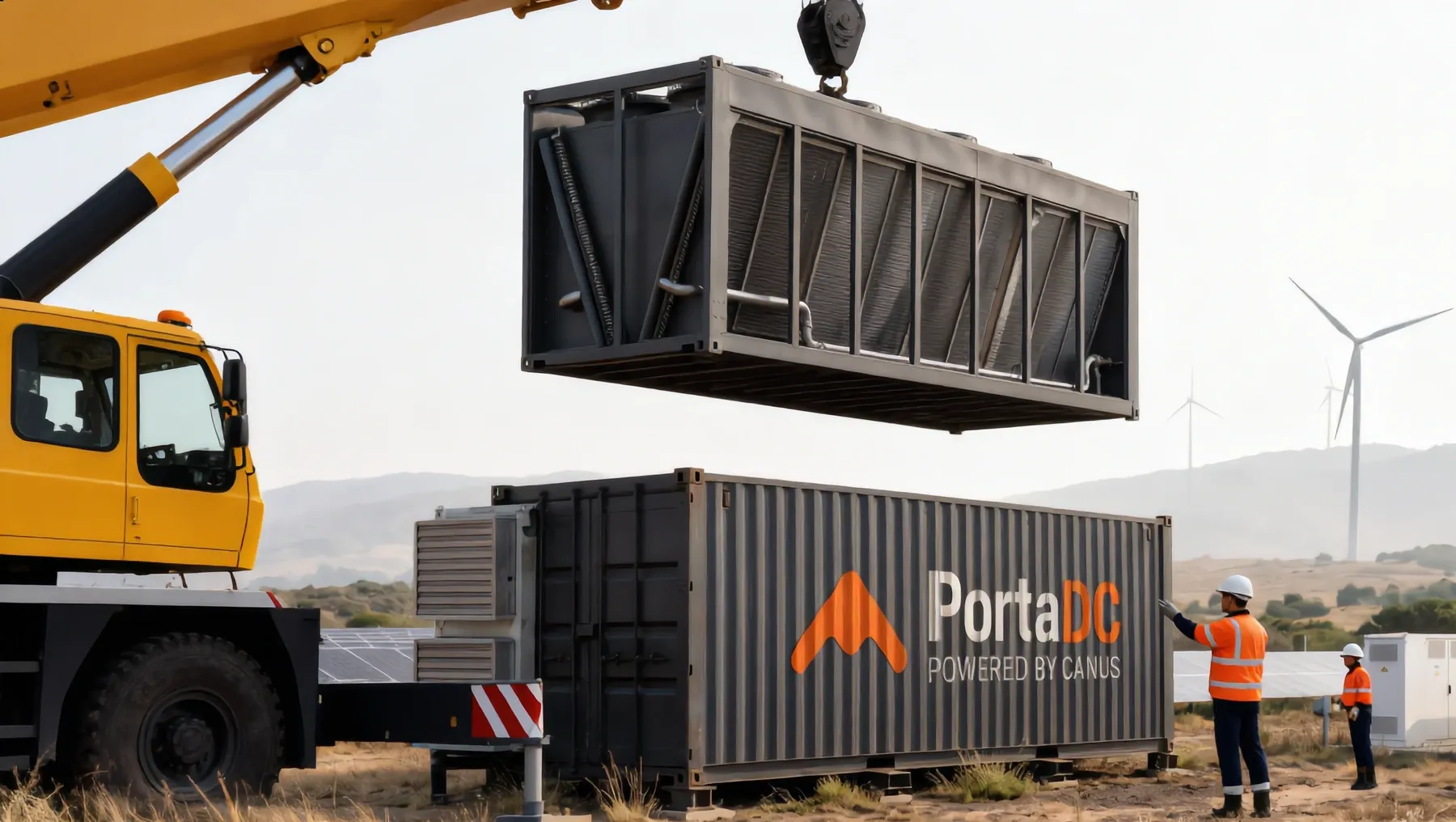
Deliver the lower compute vault and upper heat-rejection module to site, crane onto concrete sleepers, and lock interconnections in a single day. No hall, no raised floor, no fit-out.
- 04
Energisation & LARUS AI™ handover
Stage 04 · CANUS
Complete behind-the-meter tie-in, FrontierGate™ boundary verification and live telemetry onboarding within our 120-day target window. Your racks slide in; one invoice a month, rent per IT-kW and power at cost.
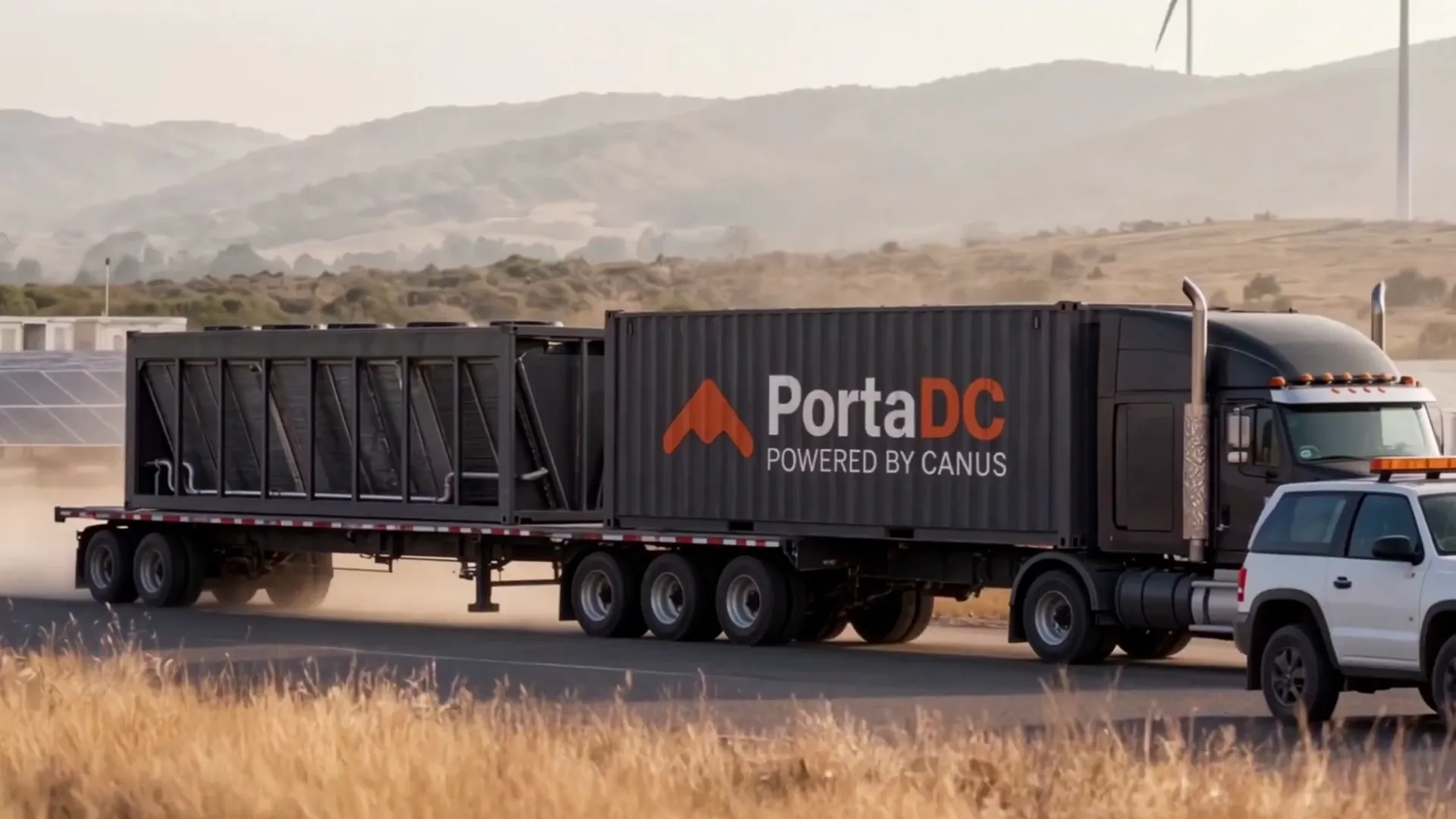
Built in the factory.Lifted in on the day.
- 120 days
- Target from order
- 2
- Modules per pod
Every leaseis three numbers.
Firm to the tenant, flexible to the host. The same three numbers sit in every PortaDC lease; only their values change with the tier.
01 · The firm floor
Power the host cannot cut
A contracted IT load the host never touches. Pulse tenants run their whole allocation here.
02 · The cushion
Headroom held at the boundary
An always-on reserve held at the boundary. When the host needs headroom, FrontierGate™ holds the host's power boundary while the tenant's firm floor never moves.
03 · The flexible band
Surge only, tenant-run
A contracted 25 to 40% band that Surge tenants shape themselves, answering a power-budget signal with their own orchestration. It is why Surge rent is lower.
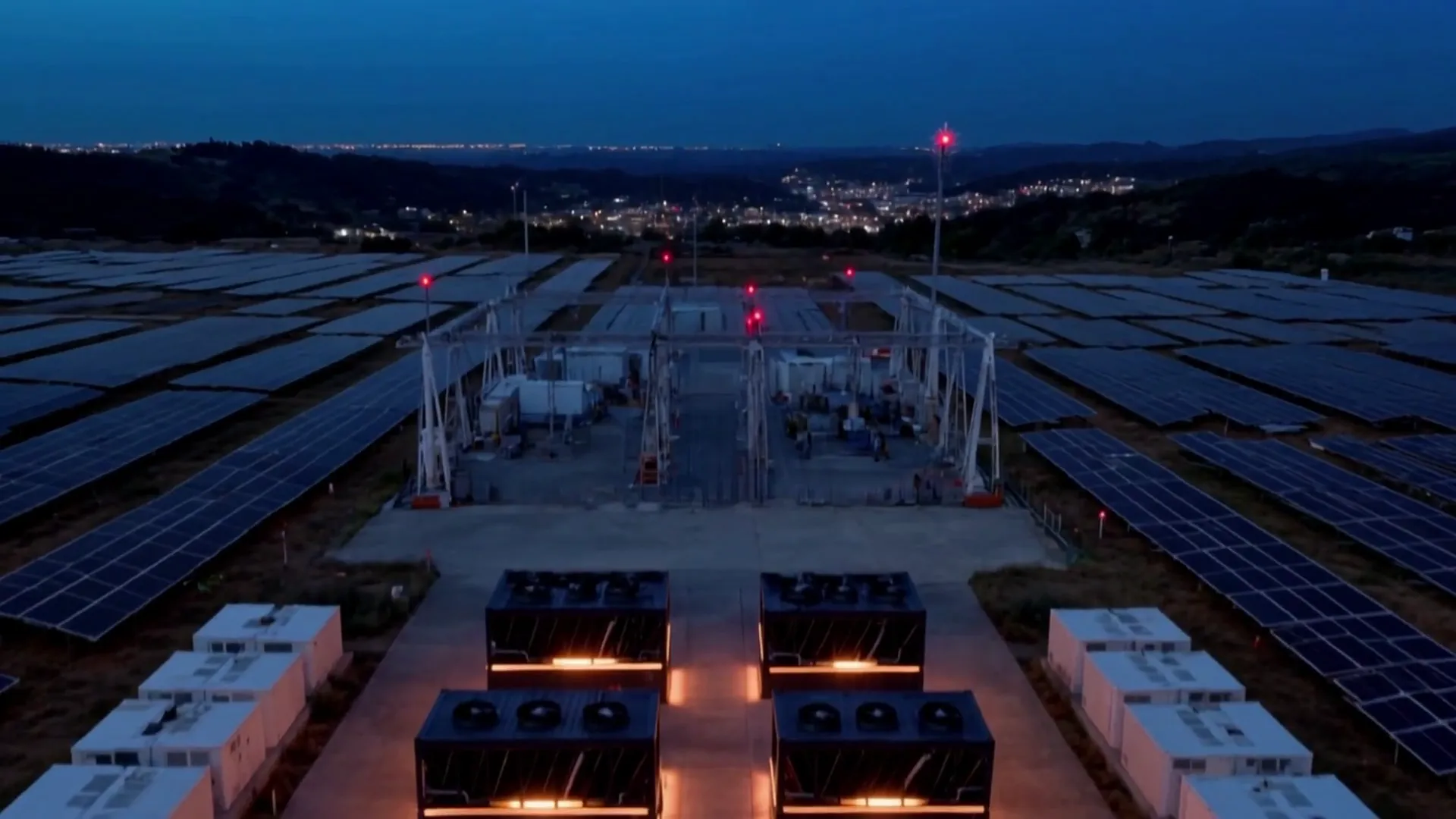
Add a pod.Then a fleet.
- 450 kW
- Per block
- 22.5 MW+
- Per campus
Add a pod,not a building.
Capacity grows in pod-sized steps, on the same pad or at the next site, built the same way, recorded the same way.
- 01
On the same pad
Pads are laid out for four. The next pod lands beside the first, shares the connection and joins the same lease.
- 02
At the next site
Where the power is cheaper or the customer is closer, a new pad at a new site. Pods connect by fibre and run as one fleet under one record.
- 03
The record compounds
Every pod carries the same measured history from factory test onward, so the second pod is cheaper to finance than the first and the twentieth is cheaper than the second.
Deploy
Tell us the workload.We'll bring the pod.
A short conversation about what you run, where your customers are and when you need it. No quotation and no reservation until you say so.
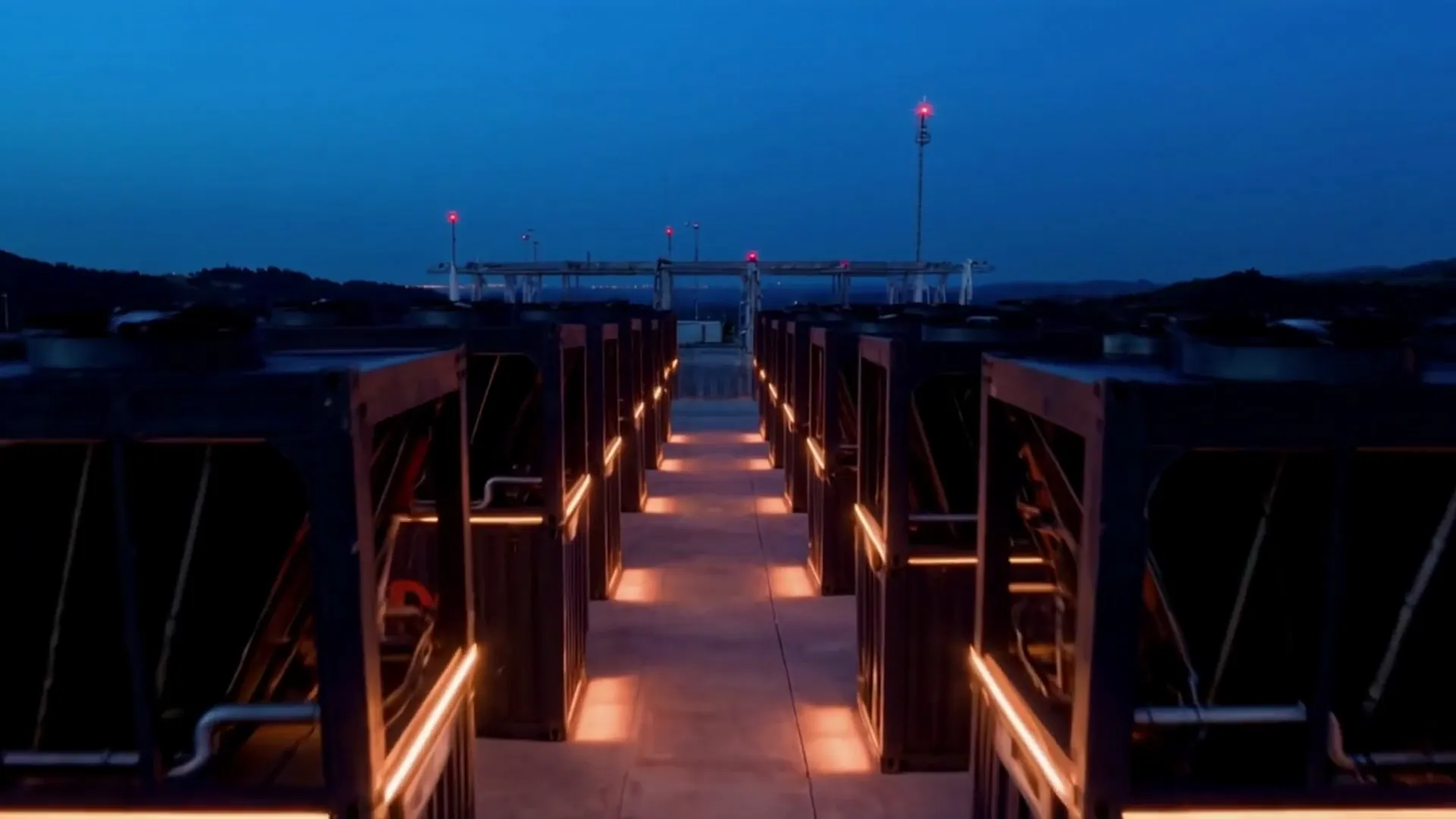
Up next
The campus→