CANUS/Why decentralised
Compute belongswhere the power is.
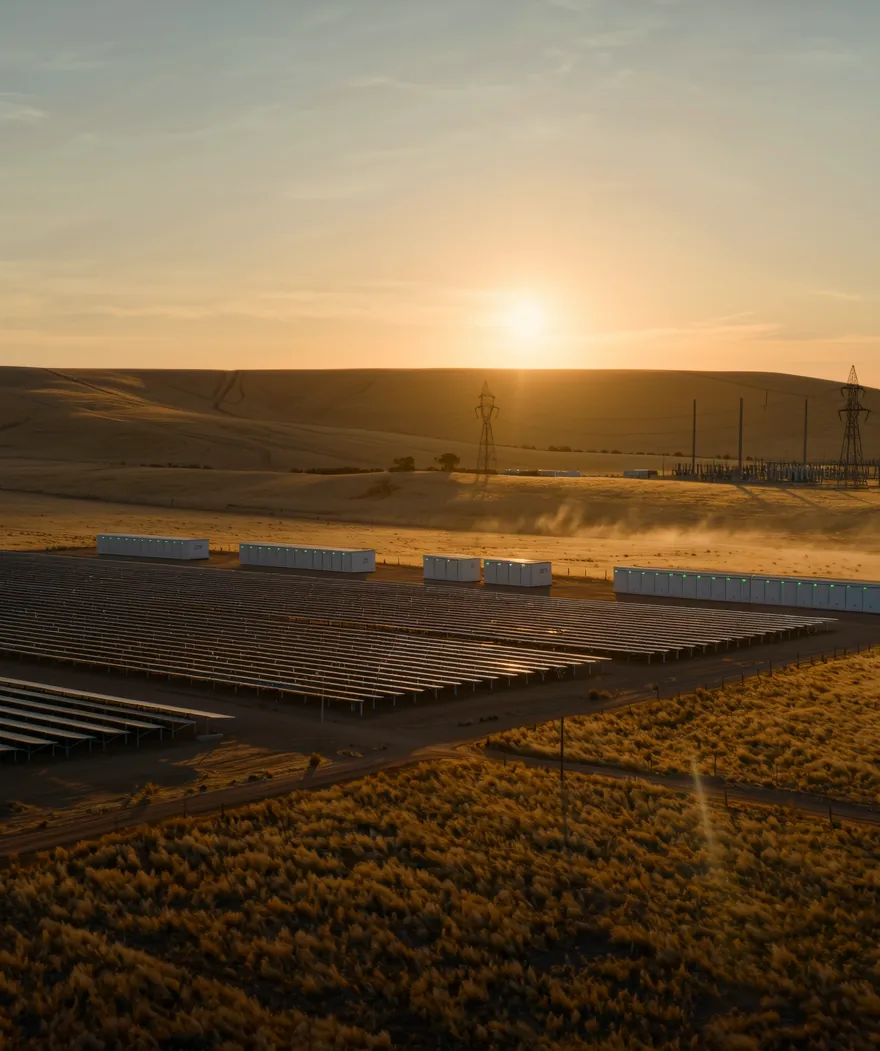
Big halls wait years for grid power. PortaDC pods go where the power already is, and run together as one fleet.
01The case
01 / 02
Six reasons the hallis the wrong shape.
Each one is a cost the metro data centre carries and the pod does not.
- 01
The queue
A metro grid connection takes years. Solar farms, battery yards and industrial premises already have one, with spare capacity behind the meter.
- 02
The power price
Direct behind-the-meter renewable and hybrid tariffs passed through under transparent site schedules (shared under NDA), delivering 12 to 21% lower all-in compute cost than Sydney metro colocation. Metro tariffs, transmission charges and demand peaks never enter the bill.
- 03
The build
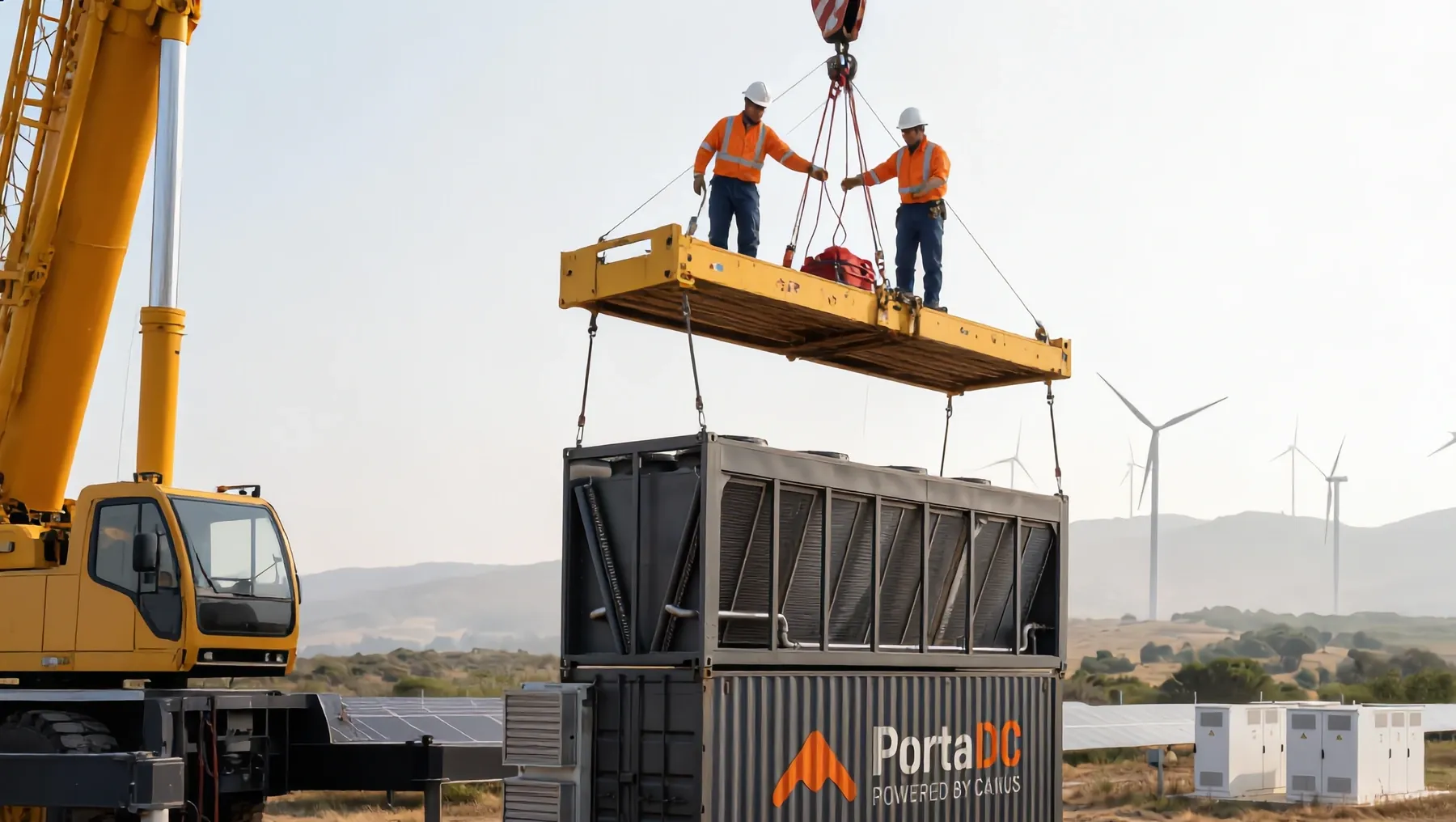
A hall is concrete poured over years. A pod is built and tested in a factory, trucked to site and craned onto a pad.
- 04
The cooling
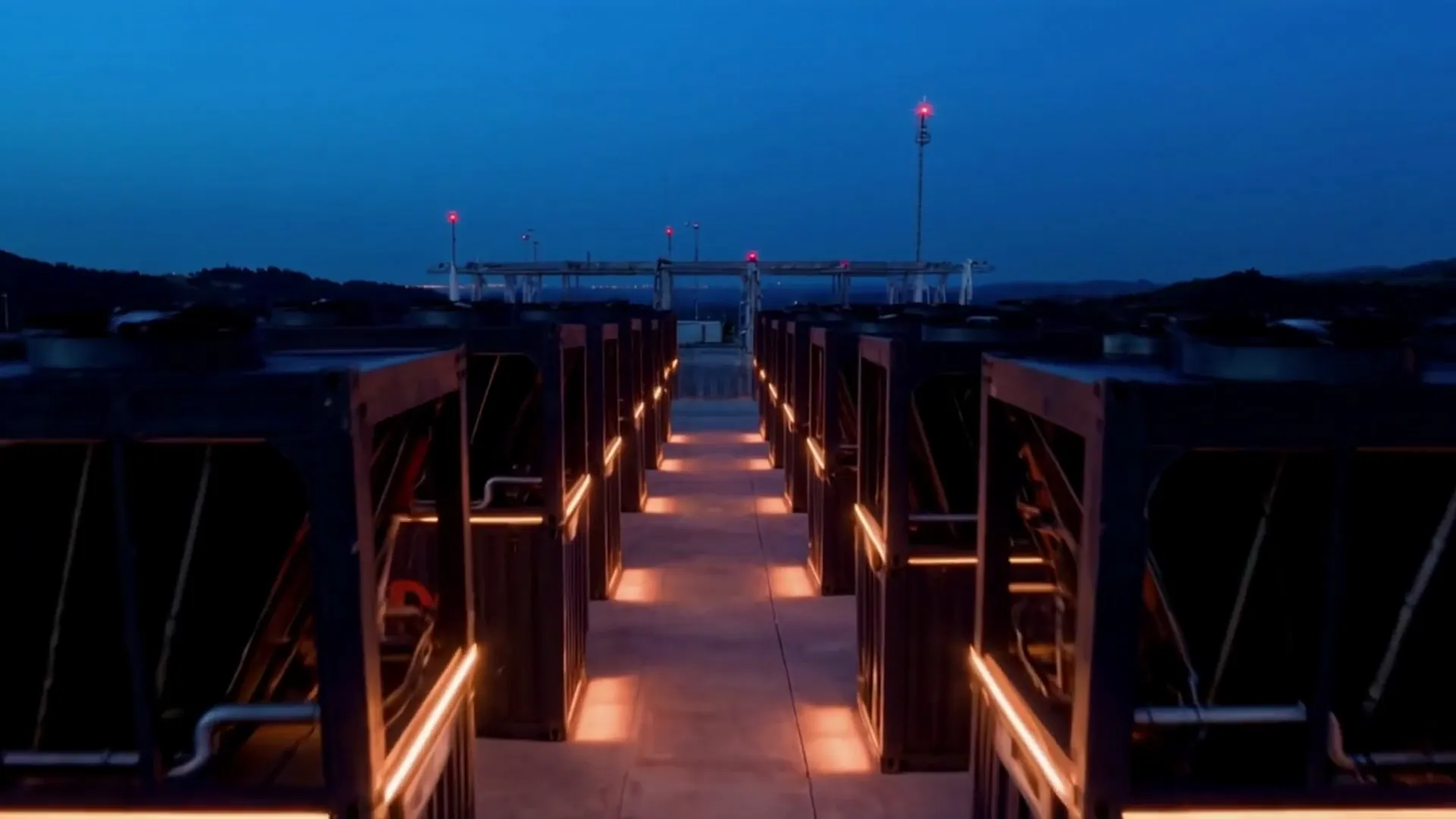
Coolant runs straight to the chip and the heat leaves through a dry cooler on the roof. Supply at or below 35 °C at a 45 °C design ambient, closed loop, no evaporative water after fill.
- 05
The fleet
Pods on one pad, or across several sites, connect by fibre and run as one fleet under one operating record. Capacity grows a pod at a time, where the power is cheapest.
- 06
The tenant
You bring the GPUs and keep your warranties. One invoice: rent per IT-kW per month, power at cost.
Build like a hyperscaler.Without the hall.
- 120 days
- Target from order
- 0 L
- Evaporative water
The halland the pod.
The same compute, two very different buildings. Modern metro halls offer liquid cooling too; the difference is the queue, the price of power and the build.
Metro data centre
- 01Years to a grid connection
- 02Concrete hall, about six times the build cost per MW
- 03Metro power tariffs and transmission charges
- 04Evaporative cooling, millions of litres a year
- 05Capacity added by building another hall
PortaDC pod
- 01Behind the meter at a connected site
- 02Factory-built pod, about one-sixth of a metro hall per MW
- 03Behind-the-meter renewable power at cost, site schedules under NDA
- 04Closed liquid loop, no evaporative water
- 05Capacity added by craning in another pod
Deploy
Start wherethe power is.
Tell us the workload and the region. We'll come back with a site, a pod and a date.
Up next
About CANUS→